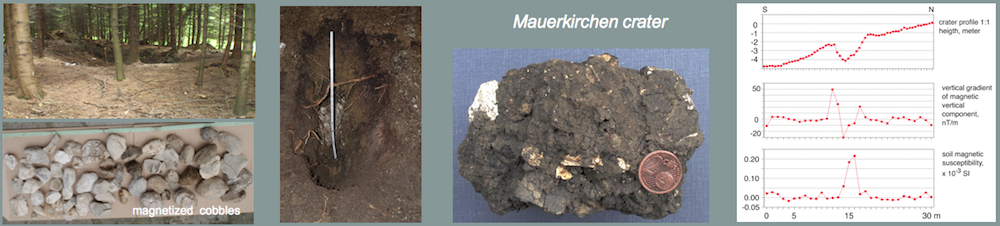
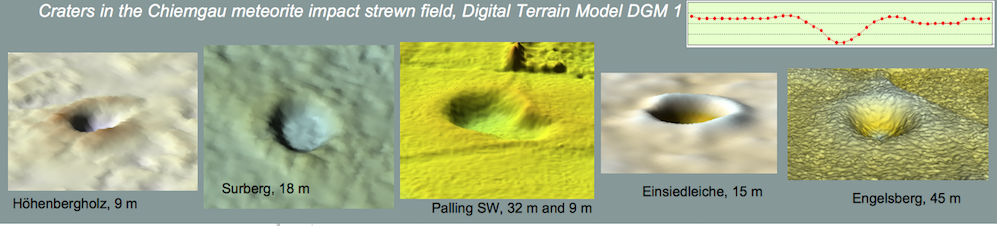
Shatter cones from the Lake Tüttensee crater (Chiemgau impact)

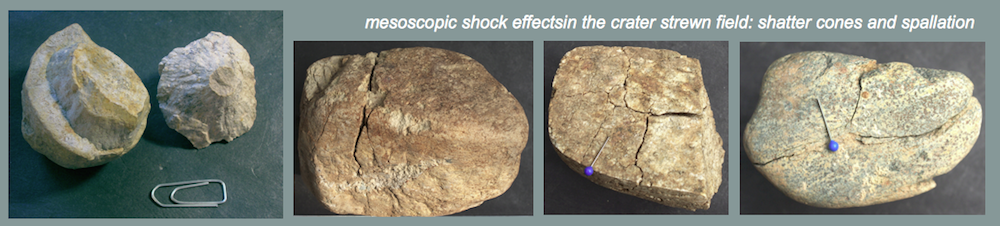
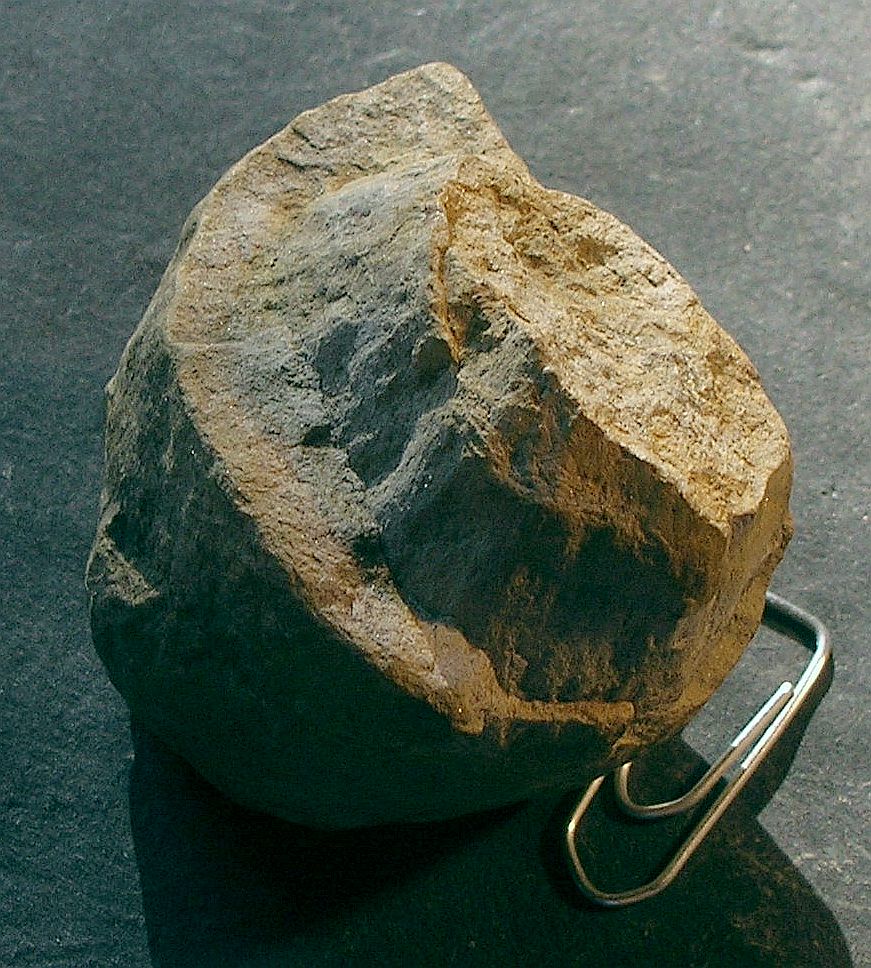
Shatter cones are conical fractures in rocks exhibiting typical fracture markings that are produced by shock waves and that belong to the well-known and reliable macroscopic shock features in rocks from meteorite craters (impact structures).

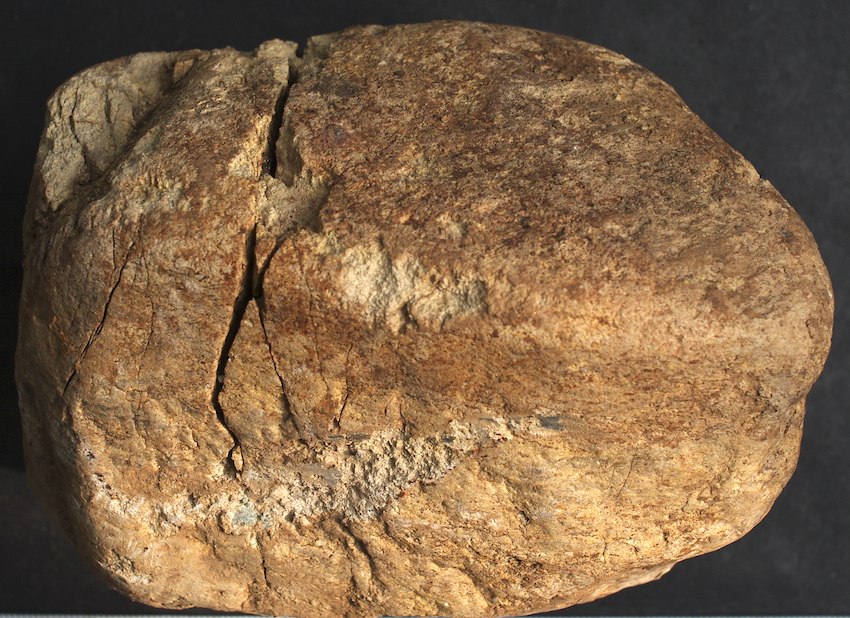
So far, shatter cones have never been found in the crater strewn field of the Chiemgau impact as a positive impact evidence, which we explained by the predominant uncemented loose sediments of the impact target. In this regard, a change of thinking is necessary since only recently clear shatter cone structures were detected in a rock sample from the Lake Tüttensee ring wall (Fig. 1).

shatter cones from the tüttensee crater, chiemgau impact meteorite crater strewn field

Fig. 1. Shatter cones with counter orientation from the Lake Tüttensee crater. Continue reading “Shatter cones from the Lake Tüttensee crater (Chiemgau impact)”

Chiemgau impact: two contributions to the AGU 2011 Fall Meeting, San Francisco

At the AGU (American Geophysical Union) Fall Meeting, December 5-9, two contributions focusing on special features of the Chiemgau meteorite impact strewn field have been presented:

Neumair, A. & Ernstson, K. (2011), Geomagnetic and morphological signature of small crateriform structures in the Alpine Foreland, Southeast Germany, Abstract GP11A-1023 presented at 2011 Fall Meeting, AGU, San Francisco, Calif., 5-9 Dec.

The poster may be clicked here: Poster Neumair & Ernstson

Ernstson, K. & Neumair, A. (2011), Geoelectric Complex Resistivity Measurements of Soil Liquefaction Features in Quaternary Sediments of the Alpine Foreland, Germany, Abstract NS23A-1555 presented at 2011 Fall Meeting, AGU, San Francisco, Calif., 5-9 Dec.

The poster may be clicked here:  Poster Ernstson & Neumair

Chiemgau impact: an article on the impact-induced soil liquefaction (rock liquefaction)

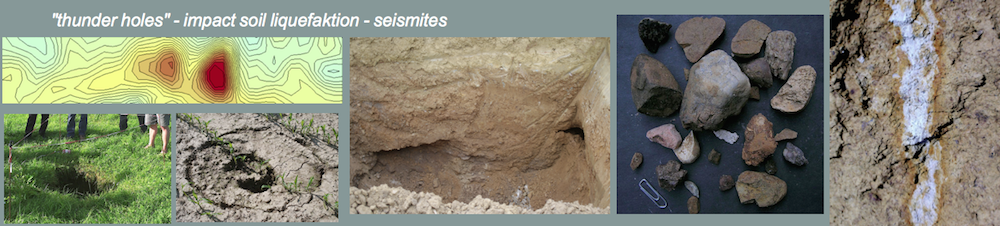
Article on the Thunderhole phenomenon in the Chiemgau impact area: 

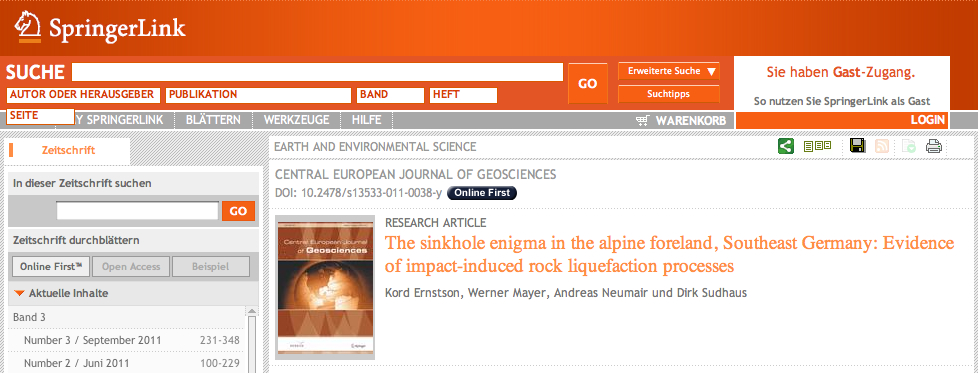
The sinkhole enigma in the alpine foreland, Southeast Germany: Evidence of impact-induced rock liquefaction processes

Kord Ernstson, Werner Mayer, Andreas Neumair and Dirk Sudhaus

CENTRAL EUROPEAN JOURNAL OF GEOSCIENCES 

The article describes the very first geologic and geophysical investigations of the so-called Thunderhole (“Donnerloch“) phenomenon in the region of the small town of Kienberg north of Lake Chiemsee in Southeast Bavaria. The authors conclude that the innumerable enigmatic sudden sinkhole cave-ins having happened in living memory originate from late and even today acting processes of an earlier shock-induced underground rock liquefaction known from strong earthquake shocks. The geologically prominent underground structures that have now been uncovered are considered the result of impact shocks in the course of the formation of the Chiemgau meteorite crater strewn field (Chiemgau impact).

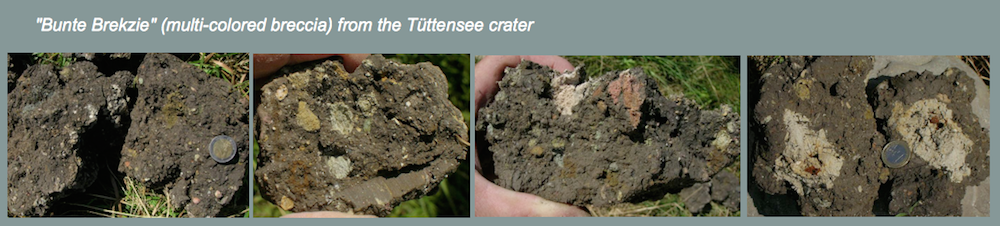
Some characteristic images of this highlighting rock liquefaction (or soil liquefaction) process can be seen on continuing

Continue reading “Chiemgau impact: an article on the impact-induced soil liquefaction (rock liquefaction)”

Shock spallation – a typical impact process in the Chiemgau meteorite crater strewn field

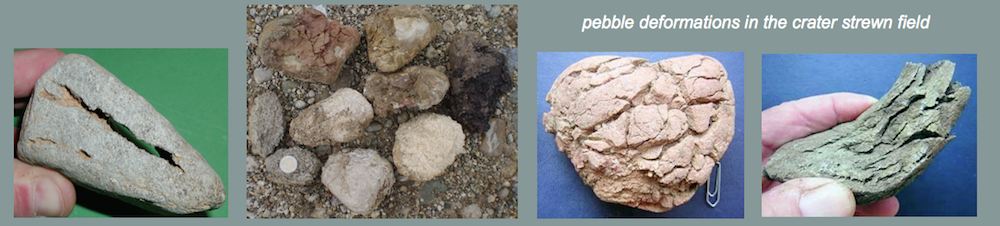
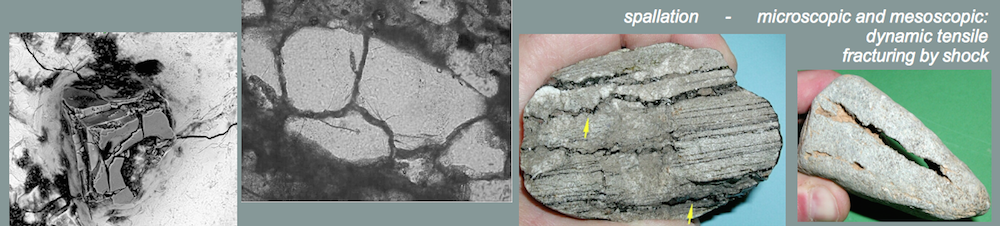
The term spallation is used in various meanings, e.g. in nuclear physics and fracture mechanics. For impact processes, spallation plays an important role (however seldom appreciated appropriately) and is closely related with the propagation of shock waves. To put it simply, the process runs as follows: On impinging on a free surface, the shock compressive wave is reflected as a tensile wave of practically identical energy. And while a compressive pulse is squeezing a rock, a tensile pulse is stretching the material thus enabling the development of tensile fractures and in an extreme case leading to the detachment of a spall or series of spalls. This is favored by the fact that the tensile strength of all materials and, hence, also of rocks is considerably less than the compressive strength. This is why it is often disregarded that the enormous destructions upon meteorite impact are not so much the result of the shock wave pressure as of the pull of the rarefaction waves. Spallation may take place also when a compressive shock pulse impinges on a boundary of material with reduced impedance (= the product of density and sound velocity) where part of its energy is reflected as a rarefaction pulse that may likewise enable tensile fracturing. It is worth remarking, however compatible with shock physics, that the process of spallation can be observed on arbitrary scales, from microscopically small deformations right up to the movement of huge rock complexes.

limestone cobble shock spallation fracture chiemgau impact

Fig. 1. A limestone cobble (14 cm long) exhibiting the typical open spallation tensile fractures. The process is nicely documented by the observation that the running fractures have come to standstill midway through the cobble. In case they had continued running, the cobble would have been fractionized to pieces, and nothing of note would have remained. Continue reading “Shock spallation – a typical impact process in the Chiemgau meteorite crater strewn field”

The Chiemgau impact hypothesis and Wikipedia

We are watching with interest discussions on relevant Wikipedia articles, and we would like to put the reader of this website in a position to receive a first-hand impression of the varied quality of the contributions to the discussion and to form her/his own opinion about the various versions of the Wikipedia articles:

http://en.wikipedia.org/wiki/Talk:Chiemgau_impact_hypothesis


New article in Mediterranean Archaeology & Archaeometry – International Scientific Journal

THE CHIEMGAU METEORITE IMPACT AND TSUNAMI EVENT (SOUTHEAST GERMANY): FIRST OSL DATING

I. Liritzis, N. Zacharias, G.S. Polymeris, G. Kitis, K. Ernstson, D. Sudhaus, A. Neumair, W. Mayer, M.A. Rappenglück, B. Rappenglück

Mediterranean Archaeology and Archaeometry, Vol. 10, No. 4, pp. 17‐33

The full article may be clicked here:

PDF

The Chiemgau meteorite impact event – also in the Saarland (West Germany) region?

by CIRT – Chiemgau Impact Research Team
The abstracts for the 74th Annual Meeting of the Meteoritical Society, August 8-12, in Greenwich, England, UK, have now been published in the Internet. With regard to the Holocene Chiemgau large meteorite strewn field three contributions are especially interesting because of their immediate relation to this impact event. The abstract pdfs can be downloaded:

[1] A POSSIBLE NEW IMPACT SITE NEAR NALBACH (SAARLAND, GERMANY)
E. Buchner, W. Müller and M. Schmieder
www.lpi.usra.edu/meetings/metsoc2011/pdf/5048.pdf
[2] NALBACH (SAARLAND, GERMANY) AND WABAR (SAUDI ARABIA) GLASS – TWO OF A KIND?
M. Schmieder, W. Müller and E. Buchner
www.lpi.usra.edu/meetings/metsoc2011/pdf/5059.pdf
[3] IMPACTITES AND RELATED LITHOLOGIES IN GERMANY – CURRENT STATE OF KNOWLEDGE
M. Schmieder, W. Müller, L. Förster and E. Buchner
www.lpi.usra.edu/meetings/metsoc2011/pdf/5060.pdf

Among the authors W(erner) Müller is particularly singled out who has only recently performed meticulous field work near the town of Nalbach in the Saarland region near the French border. He sampled a large amount of peculiar rocks and natural glasses as well as suspected iron meteorites. From these finds he concludes the possible existence of a meteorite impact only in younger times, and as the discoverer of the phenomenon he has published an article in the Scribd scientific internet forum:

Prims: a possible Holocene meteorite impact in the Saarland region, West Germany
which may be clicked HERE

This postulated meteorite impact is shortly attended by the other authors in the above-mentioned abstracts where the original Scribd article is referred to only in abstract [2], but strangely not in abstract [1] obviously standing more to reason thematically.

Amazingly similar: Finds from the Saarland suspected impact and the Chiemgau impact.

The close relation to the Chiemgau impact arises from Werner Müller’s Scribd article and, hence, comprises the abstract articles of Buchner et al. and Schmieder et al. As can be read in the article of Müller and especially pointed out by him, many striking parallels to finds in the Chiemgau meteorite crater strewn field are obvious:

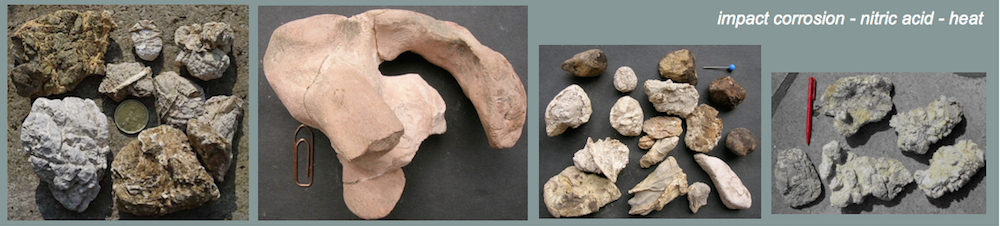
— pebbles and cobbles showing mechanical load and high-temperature signature in the form of glass coating and interspersing the in most cases sandstone samples
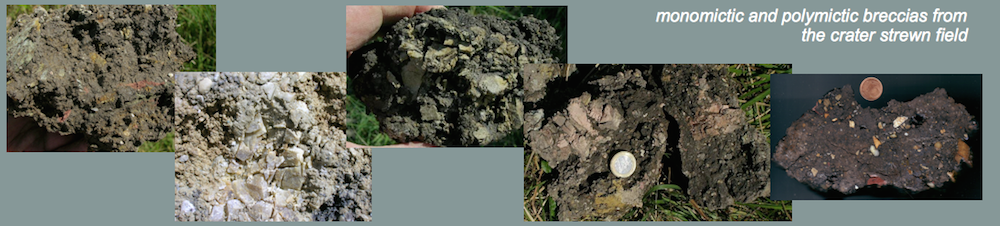
— polymictic breccias
— slag-like melt rocks
— glass as matrix of melt rocks with various rock fragments
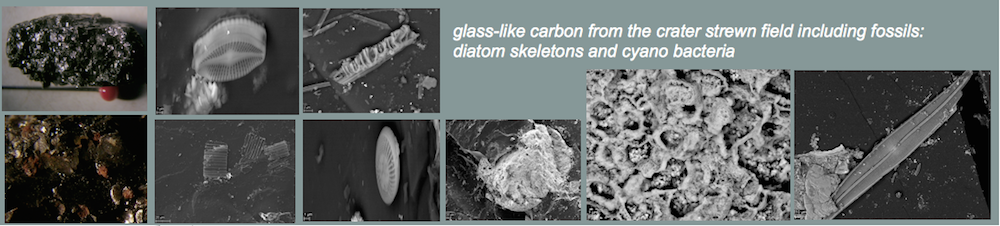
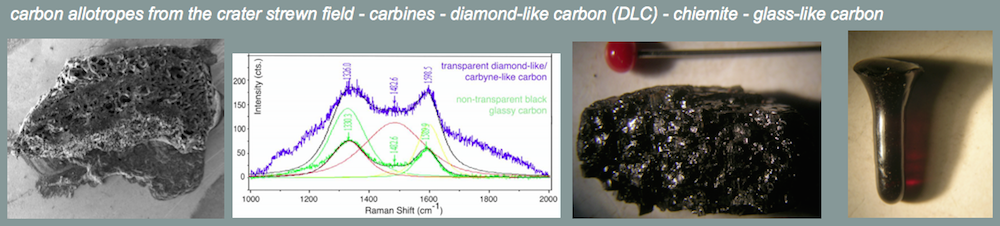
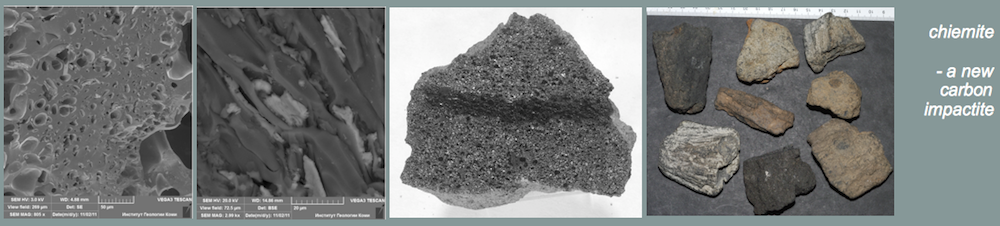
— glass-like carbon
— spherules
— probably shock-induced spallation effects in melt rocks

The reader is encouraged to take a look at the images in Werner Müller’s Scribd article and to compare them with the Chiemgau samples. Images are to be found on the website https://www.chiemgau-impact.com/petrographie.html and in the Ernstson et al., 2010 article or, as originals, in the Grabenstätt impact museum

Although there is so far no definite age for the postulated Saarland impact, W. Müller, because of first-sight field impressions and considering the in most cases very fresh glasses, clearly favors a Holocene age. Hence, with regard to the Chiemgau impact Holocene age the obvious question arises whether the Chiemgau and Saarland impacts may belong to the very same cosmic event. This can be imagined given the cosmic projectile was already in disintegration when approaching Earth (like, e.g. in the 1994 Shoemaker-Levi-9 comet crash with Jupiter) and in the end leaving impact scars in an even much larger strewn field than hitherto assumed for the Chiemgau impact.

From this viewpoint of a relation of both phenomena it is rather remarkable if the CIRT research project on the Chiemgau meteorite impact achieves considerable support by two of the abstract authors (E. Buchner, M. Schmieder) as is well known confirmed opponents of the CIRT research and of the Chiemgau impact at all. Notably the hint of Buchner et al. [1] to a possible meteoritic airburst to have produced the Saarland impact signature raises attention because such a possibility has already been discussed for the Chiemgau impact event in the context of the formation of some peculiar craters there (e.g. Ernstson et al., 2010, S. 92-93).

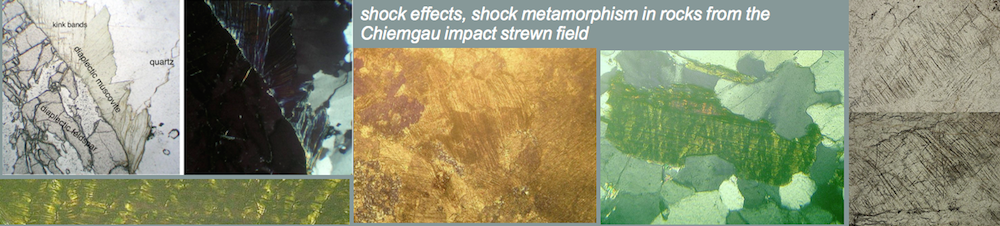
A comment on the abstract article of Schmieder et al. [3] is being added. The authors refer to several structures in Germany for which a meteoritic origin has been postulated, “[cit.] however, all of these geologic features currently lack evidence for shock metamorphism and/or meteoritic matter as proof for impact”. Among these structures, the Chiemgau impact has been classified, thereby referring to the 30 pages article ‘Ernstson K. et al. 2010. J. Siberian Fed. Univ. Engin. Technol. 1:72–103 (HERE to be downloaded)‘ Either have Schmieder and Buchner never read this basic and comprehensive article about the Chiemgau impact or they calculatedly conceal that on p. 82-83 under the heading 8. Shock metamorphism generally accepted impact shock effects in rocks from the Chiemgau craters together with several photomicrographs are reported. The shock effects include multiple sets of planar deformation features (PDFs) with up to five sets in one quartz grain, and diaplectic glass requiring even higher shock pressures of formation than do PDFs.

This keeping silence about proofs for the Chiemgau impact and at the same time claiming the Chiemgau impact is not confirmed [3], is rather odd with regard to the fact that comparably unambiguous impact proofs for the Saarland phenomenon could so far not be presented [1].

Owing to the promising similarities between Chiemgau impact material and material from the Saarland area we can but encourage the colleagues to perform continuing research. We are glad to see that the research of Buchner and Schmieder on the Saarland impact contributes to a better understanding of the Chiemgau impact, even though their work features some deficits and oddness.
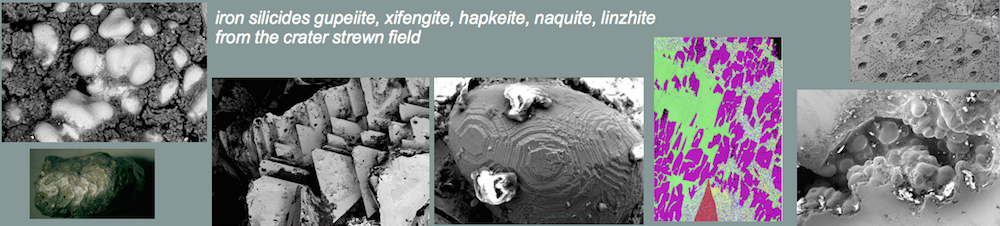
 

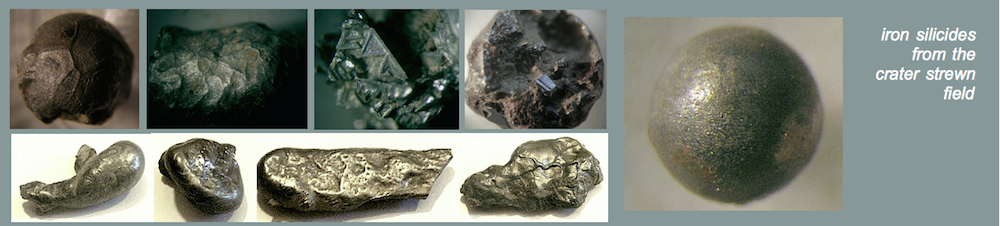
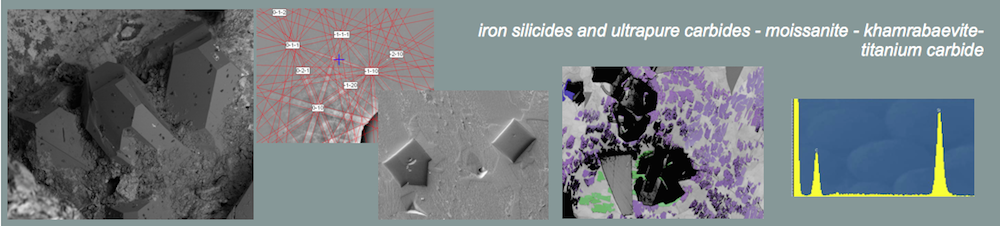
Gupeiite, xifengite, Fe2Si ? hapkeite: Strange iron silicide matter from the Chiemgau meteorite impact

The strange iron silicide matter from the Chiemgau meteorite impact strewn field at the 42nd Lunar and Planetary Science Conference (LPSC), March 7-11, 2011, The Woodlands, Texas, USA:

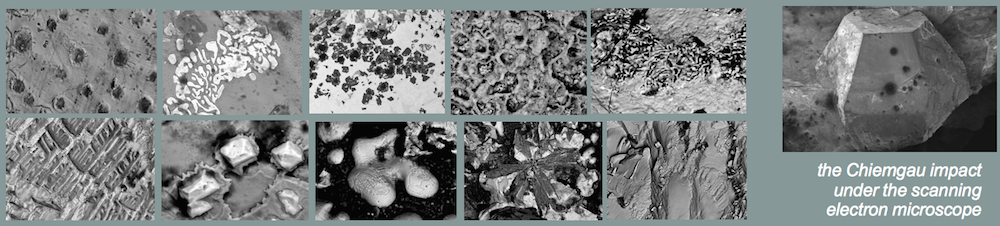
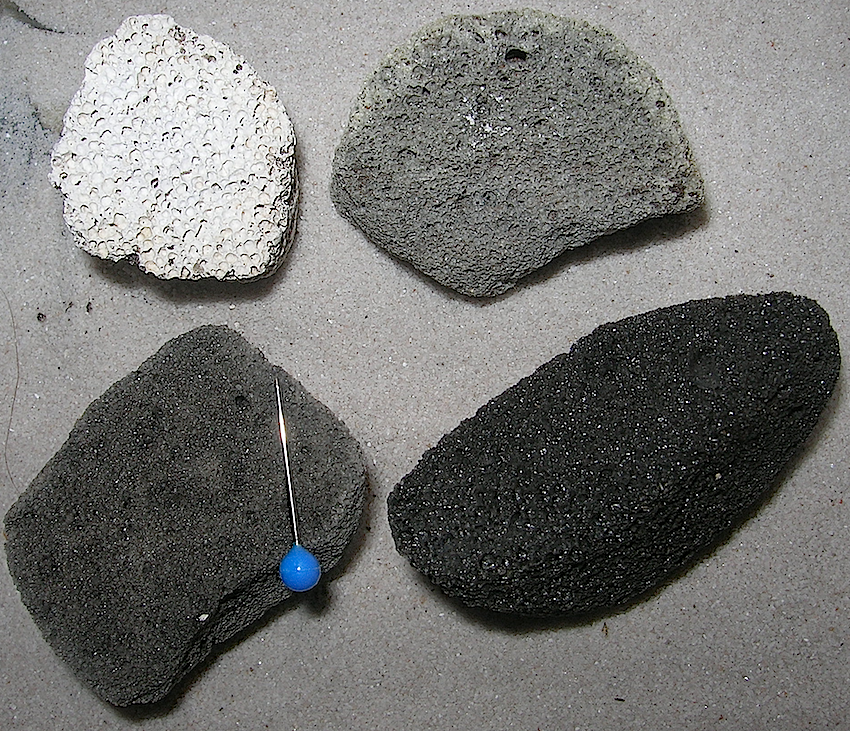
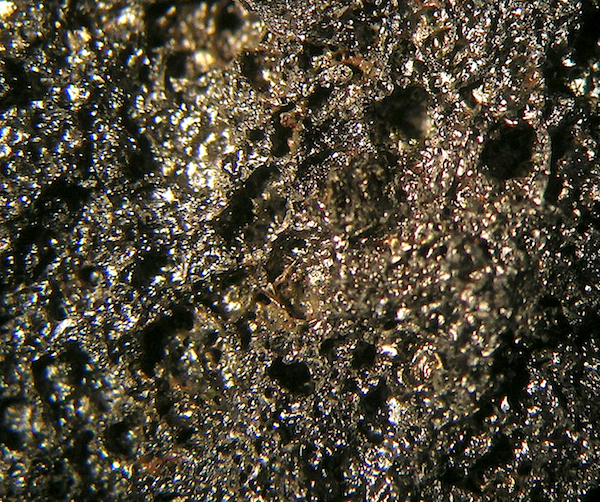
iron silicides xifengite gupeiite hapkeite ? moissanite micro-craters chiemgau impact
SEM and TEM analyses of minerals xifengite, gupeiite, Fe2Si (hapkeite ?), titanium carbide (TiC) and cubic moissanite (SiC) from the subsoil in the Alpine Foreland: Are they cosmochemical?

M. Hiltl1, F. Bauer2, K. Ernstson3, W. Mayer4, A. Neumair4, and M.A. Rappenglück4
1Carl Zeiss Nano Technology Systems GmbH, Oberkochen, Germany, 2Oxford Instruments GmbH NanoScience, Wiesbaden, Germany, 3University of Würzburg, Germany, 4Institute for Interdisciplinary Studies, Gilching, Germany

Abstract: Click here..

Click here the enlarged images > Continue reading “Gupeiite, xifengite, Fe2Si ? hapkeite: Strange iron silicide matter from the Chiemgau meteorite impact”

Highlighting a controversy:

Highlighting a controversy: “The fall of Phaethon”, discussion and reply in “Antiquity” journal

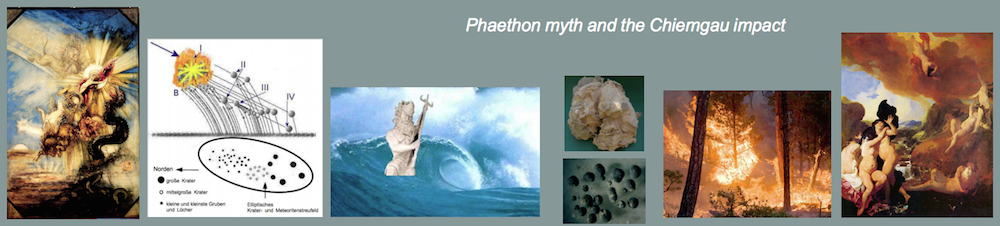
In summer 2010 the historian Barbara Rappenglück and other scientists of the Chiemgau Impact Research Team have published an article in the prestigious international journal “Antiquity”. The article having been peer-reviewed by independent international experts is entitled “The fall of Phaethon: a Greco-Roman geomyth preserves the memory of a meteorite impact in Bavaria (south-east Germany)“ (Antiquity 84, 2010, 428-439; http://antiquity.ac.uk/ant/084/ant0840428.htm). In the actual issue of “Antiquity” officials of the Bavarian State Office for Environment (LfU) give a (not peer-reviewed) “Response” to the article of Rappenglück et al., trying to basically question the existence of a meteorite impact in the Chiemgau area (Bavaria, Germany), the so-called Chiemgau impact (Doppler et al., Antiquity 85, 2011, 274-277). Rappenglück et al. reply in the same issue of „Antiquity“ and reject the objections of the LfU (Antiquity 85, 2011, 278-280; http://antiquity.ac.uk/ant/085/ant0850278.htm). The copyright guidelines of “Antiquity” do not allow for making the text available on this website. Hence we here give an overview of our rejection.

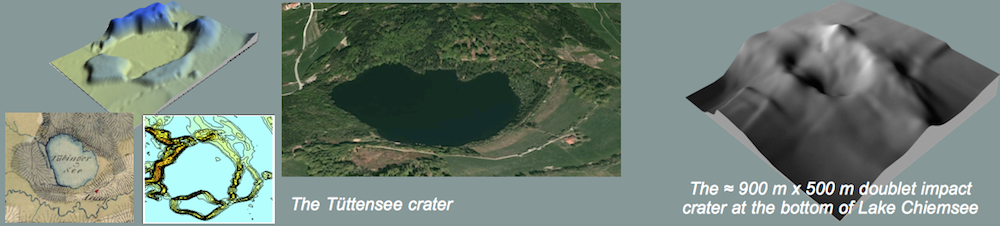
Doppler et al.’s argumentation relies on studies that are based on approaches inappropriate for impact research. This is illustrated by the following example: Doppler et al. (2011: 276) reject our proposed 900×400 m double-crater (Ernstson et al. 2010: 21; Rappenglück et al. 2010: 430) in Lake Chiemsee with the argument that “over 200 km of seismic profiles” and four piston cores had not shown any “major disturbance in the sedimentary sequence”. Let us first look at the “200 km of seismic profiles”. This seemingly remarkable length, being projected on the expanse of Lake Chiemsee with its 80 km2 as an orthogonal net, turns out to produce a big mesh size of about 800 m. This means that even a big structure like the double-crater could easily have escaped detection. In comparison, our detection of the double-crater happened by spider-web-like sonar measurements of a small section of the lake. Let us additionally look on Doppler et al.’s four piston cores. With respect to impact research four cores in relation to an expanse of 80 km2 are comparable to a needle in a haystack. Additionally, Doppler et al. are taken in by the misapprehension that in case of secondary impacts into Lake Chiemsee its total lakebed would have been completely disturbed (Doppler et al. 2011: 276: “They [the cores] produced undisturbed sections and show no indication of a major disturbance in the sedimentary sequence which would be expected from an impact.”) This idea shows an amateur-like understanding of impact processes and a total ignorance of the geophysics involved in a meteorite impact, as will be shown in the next paragraph dealing with their drilling at Lake Tüttensee.
The central argument of Doppler et al. is based on a drilling at the edge of Lake Tüttensee, where they encountered “an undisturbed sequence ranging from 4800 years ago near the surface to 12 500 years ago from the lake deposits at the base” (Doppler et al. 2011: 274). From this observation they conclude that neither the Tüttensee basin is a meteorite crater nor has it been formed in very recent Holocene times (as claimed by us), but owes its existence to the last ice age. Doppler et al.’s conclusion is based on the (false) assumption that the location of their drilling is inside the crater. The question whether the location is inside or outside the crater is essential with respect to the intensity of the impact forces, their propagation and their effects. The nowadays visible rests of the rim wall suggests that the location of the drilling should be inside the original crater. But as it is illustrated in the graphics, this is not true. The location of the drilling is outside the original cavity of the crater, where according to impact cratering shock intensities are already lowered to such a degree (a few kbars maximum pressure) that minor deformations are not possibly to be seen in a few-centimeter diameter sized drill core, not to mention the absence of any detectable enhanced temperature signature. Hence, Doppler et al.’s central argument proofs to be invalid.

Kraterbildung1 3

Simplified impact cratering process and the position of the LfU drill hole. First published in ‘Antiquity’ 85, 2011, 279.

Here we point out our decisive argument for a meteorite impact, which has been consequently ignored by Doppler et al. Planar deformation features (PDFs) in quartz, a manifestation of shock metamorphism of rocks, is internationally accepted as proof of an impact (Stöffler & Langenhorst 1994: 165). PDFs are the result of very short-term but extreme forces (minimum pressures for the formation of PDFs in quartz are about 5-10 GPa [50-100 kbar]) and can only be caused by the impact of a meteorite. Neither tectonic processes nor the pressure of rock or ice overburden produce effects attributed to shock metamorphism. We have found PDFs in rocks from the Tüttensee ring wall and in the surrounding ejecta layer (as well as in other parts of our crater strewn field) (Ernstson et al. 2010: 82). These rocks were shocked in the very beginning of the impact in the center of the expanding cavity, excavated from the crater and deposited outside of it. A photomicrograph of such PDFs was published in our article (Rappenglück et al. 2010: fig. 3); PDFs from several locations in our crater field can be seen in Ernstson et al. (2010: 82). For that reason alone the Chiemgau meteorite impact is confirmed.

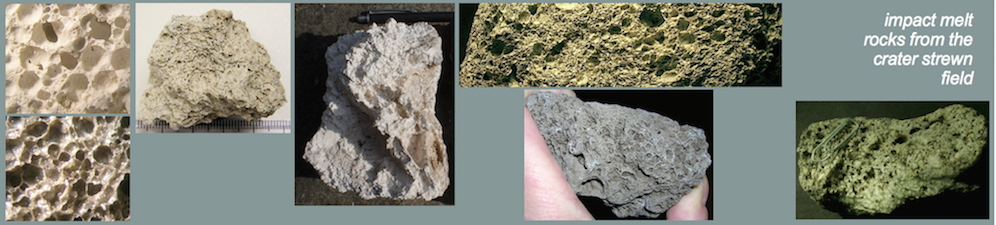
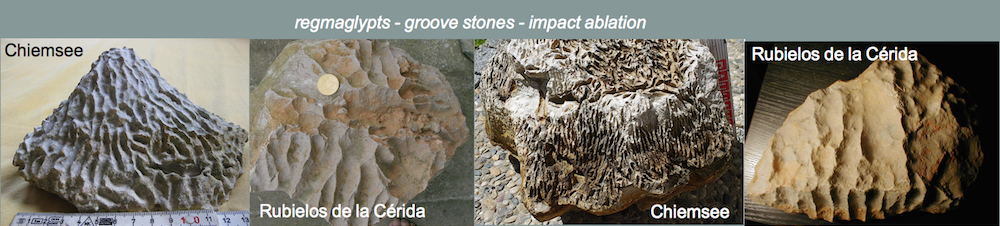
Instead of facing up this evidence of shock metamorphism and respecting the internationally accepted cogency of shock metamorphism for the proof of a meteorite impact, Doppler et al. try to persuade their readers that their (untenable) criticism of secondary aspects (be it the question of the dating, of the carbonaceous spherules, the strongly corroded cobbles, the vitrified stones, the so-called groove stones, the iron silicides etc.) brings discredit on the impact event as a whole. With this tactics our critics for one thing apply an unscientific practice, for another thing they thereby give proof of their fundamental lack of knowledge concerning impact research and the accepted criterions in this field of research. Doppler et al. by themselves provide an almost absurd evidence of this ignorance by mentioning „astronomical conditions required as a criteria for an impact“ (Doppler et al. 2011: 277, with reference to Heinlein). Such “astronomical conditions required as criteria for an impact” simply do not exist. The reference to Heinlein (Der so genannte „Kelten-Killer-Komet“ – Gab es einen Kometeneinschlag im Chiemgau? Journal für Astronomie, III/2009, Nr. 30, Zeitschrift der Vereinigung der Sternfreunde e.V., p. 84-86.) shows that a confusion of „criteria“ and „model calculations“ is obviously given. Model calculations are characterized by a number of variables that have to be adapted in accordance to the progress of science. Hence they cannot serve as criteria for the proof of anything, and our critics are taken in by a misapprehension. At https://www.chiemgau-impact.com/neu_disk.html more detailed information concerning the internationally accepted criteria for meteorite impacts are available as well as an overview how the Chiemgau impact matches these criteria.

In addition:

Here we present some examples of Doppler et al.’s false handling of our text in “Antiquity” (Rappenglück et al. 2010: 428-439) that show that Doppler et al.’s text even lacks the fundamental formal demands of a scientific debate.

Doppler et al. (2011: 274) contend that we would date the Chiemgau impact to “some 2500 years ago” in “the Iron Age”. In actual fact we have dated the event to a period of 4200-2800 years ago (2200-800 BC), this means the Bronze Age (Rappenglück et al. 2010: 436).

Doppler et al. (2011: 274) contend that we would date the impact by the myth. This is false: We have dated the impact and the myth independently from each other and then compared the dates (Rappenglück et al. 2010: 435-37).

Doppler et al. contend (2011: 276) that we would claim that once the Lake Chiemsee included the Lake Tüttensee. This is simply not true, and of course they fail to mention the passage in our “Antiquity” article, where this assertion should allegedly be made. This kind of handling our text can at least be called slipshod, if it is not willful distortion.

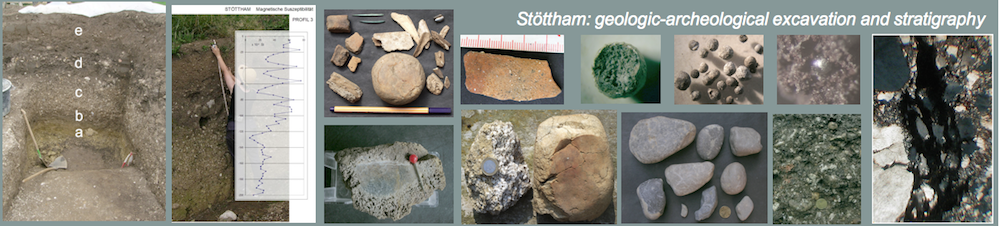
Remarkably, this kind of handling texts continues even with studies that they use to underpin their statements: Doppler et al. (2011: 277) contend that Möslein identified the disputed deposit at Stöttham “as anthropogenic”. Of course they do not give a reference, because in his excavation report (Möslein, S., 2009. Grabungsbericht. Chieming TS, Stöttham-Dorfäcker 2007/08. Technical report, Bad-Tölz, unpubl.; available at the administrative district office of Traunstein) Möslein does not at all classify the process of deposition of the layer in question (Möslein 2009: 14f.).

Doppler et al. (2011: 276) also cite Gareis (Gareis, J. 1978. Die Toteisfluren des bayerischen Alpenvorlandes als Zeugnis für die Art des spätwürmzeitlichen Eisschwundes [Würzburger Geographische Arbeiten 46]. Würzburg) as a key witness for the glacial formation of the Tüttensee landscape. But Gareis (1978: 68) several times explicitly excludes a glacial origin of parts of the Tüttensee rim wall.

These examples cast a poor light even on the formal solidity of Doppler et al.’s text.

Recommended for further reading:

Ernstson, K., Mayer, W., Neumair, A., Rappenglück, B., Rappenglück, M.A., Sudhaus, D., Zeller, K.W. (2010), The Chiemgau Crater Strewn Field: Evidence of a Holocene Large Impact Event in Southeast Bavaria, Germany: Journal of Siberian Federal University, Engineering & Technologies 3 (1), 72-103. (http://elib.sfu-kras.ru/bitstream/2311/1631/1/04_.pdf)

Hiltl, M., F. Bauer, K. Ernstson, W. Mayer, A. Neumair, M.A. Rappenglück (2011), SEM and TEM analysis of minerals xifengite, gupeiite, Fe2Si (hapkeite?), titanium carbide (TIC) and cubic moissanite (SiC) from the subsoil in the Alpine Foreland: Are they cosmochemical?: 42nd Lunar and Planetary Science Conference, 1391.pdf. (http://www.lpi.usra.edu/meetings/lpsc2011/pdf/1391.pdf)

Liritzis, I., N. Zacharias, G.S. Polymeris, G. Kitis, K. Ernstson, D. Sudhaus, A. Neumair, W. Mayer, M.A. Rappenglück, B. Rappenglück (2010), The Chiemgau Meteorite Impact and Tsunami Event (Southeast Germany): First OSL Dating: Mediterranean Archaeology & Archaeometry, Vol.10, No. 4 (in press).

Rappenglück B., K. Ernstson, W. Mayer, A. Neumair, M.A. Rappenglück, D. Sudhaus, K.W. Zeller (2009), The Chiemgau impact: an extraordinary case study for the question of Holocene meteorite impacts and their cultural implications, Proceedings, Cosmology across cultures, ASP Conference Series 409, San Francisco, Astronomical Society of the Pacific, 338-343. (http://www.aspbooks.org/a/volumes/article_details/?paper_id=30130)

Rappenglück, B., M.A. Rappenglück, K. Ernstson, W. Mayer, A. Neumair, D. Sudhaus, I. Liritzis (2010), The fall of Phaethon: a Greco-Roman geomyth preserves the memory of a meteorite impact in Bavaria (south-east Germany), Antiquity 84, 2010, 428-439. (http://antiquity.ac.uk/ant/084/ant0840428.htm)

Schüssler, U., M. Rappenglück, K. Ernstson, W. Mayer, B. Rappenglück (2005), Das Impakt-Kraterstreufeld im Chiemgau: European Journal of Mineralogy 17, Bh. 1, 124.

The fall of Phaethon

The fall of Phaethon: a Greco-Roman geomyth preserves the memory of a meteorite impact in Bavaria (south-east Germany)

Barbara Rappenglück1, Michael A. Rappenglück1, Kord Ernstson2, Werner Mayer1, Andreas Neumair1, Dirk Sudhaus3 & Ioannis Liritzis4

Phaeton
Arguing from a critical reading of the text, and scientific evidence on the ground, the authors show that the myth of Phaethon – the delinquent celestial charioteer – remembers the impact of a massive meteorite that hit the Chiemgau region in Bavaria between 2000 and 428 BC. (Editor’s abstract)
1 Institute for Interdisciplinary Studies, Bahnhofstrasse 1, 82205 Gilching, Germany (Email: )
2 Julius-Maximilians-Universität Würzburg, Am Judengarten 23, 97204 Höchberg, Germany (Email: )
3 Albert-Ludwigs-Universität Freiburg, Institut für Physische Geographie, 79085 Freiburg, Germany (Email: )
4 University of the Aegean, Department of Mediterranean Studies, Dimokratias 1, 85100 Rhodes, Greece (Email: )
Received: 20 July 2009; Accepted: 18 August 2009; Revised: 21 September 2009
ANTIQUITY 84 (2010): 428–439 http://antiquity.ac.uk/ant/084/ant0840428.htm